I grew up in Robeson County surrounded by history. I spent much of my childhood with my great-grandparents where I gained a love for the stories of Robeson County and her people. Many of the stories that I grew up with fueled the fire in my adolescent, but growing, imagination. First hand accounts of “The Depression” and the fortitude and tribulation it took to survive. War time stories in Robeson County, the revolution on through to Vietnam. For a young mind, these were the factual fairy tales and memories that I embraced. Knowing that my great-grandparents endured through these time frames gives me a profound appreciation for them and for the historical accounts they imparted to me.
She signed me up for the war, they didn’t draft me. They wouldn’t want a one-eyed prison guard! – Da (Grand daddy Lewis)
My passion for history later lead me to pursue my history degree at UNC Pembroke. During the course of many years working at UNCP Penbroke and Robeson County History Museum, my research into the county’s history resulted in award winning exhibits, books and presentations. A midst all of the discovery and exhibition, there were always too many stories to convey. It is for this reason, I still love sharing all of the little tidbits and research about our rich history.
In this new video series “Down The Road”, I will tell my gathered stories of Robeson County and her people. I will share with you and hopefully spark interest and engage conversation in our history revisited.
The Wilmington, Charlotte, and Rutherfordton Railroad was the first to cross Robeson County. It had stops in communities that no longer exist, such as Bellamy and Alma. The Maxton station, shown here, was the last stop in Robeson County. This photograph is courtesy of the Carolina Collection, UNC-Chapel Hill and is featured in my books Images of America Robeson County and Robeson County in Vintage Postcards.
After Gen. William Tecumseh Sherman’s Union Army devastated Atlanta, he began his infamous march through the South in early January 1865. By March 7, his troops had reached North Carolina and begun their reign of terror on Robeson County.
While Sherman himself passed through the Laurinburg area on his way toward Fayetteville, his troops were spread all across neighboring Robeson County. Some of the county’s residents left detailed accounts of encounters with the troops during what turned out to be the final weeks of the war, including the Rev. Washington S. Chaffin, Annabella McCallum McElyea and Ellen Douglas Bellamy.
Lumberton The Rev. Chaffin, a circuit-riding Methodist minister, was living in Lumberton at the time of Sherman’s raid. His diary, located in the Special Collections Library at Duke University, gives his viewpoint of the time the Yankees were in town.
Rev. Washington S. Chaffin
He writes on March 9, 1865, of the Yankees’ arrival, which led to robbery and the burning of railroad property:
“Cotton was burning in different heaps,” he wrote. “Great excitement. The Yankees are said to be in two different places near here — I am incredulous, just as I penned the last word in the last line, two couriers came straining their steeds down street from Major Blount’s hollering, ‘The Yankees are coming, the Yankees are coming.’ They were not couriers, but a part of the raiding party. Almost in an instant the streets were swarming with Yankee cavalry charging in every direction. There were some 300 to 500 of them, I suppose. They robbed me of Mrs. Chaffin’s watch — Also stole Kate. They burned the county bridge, R. R. Bridge, and depot. Entered many houses & committed many depredations — They did not come into our house. Whence they came from and whither they went, I know not. My wife was greatly excited. I have owned Kate 5 years, 11 months & 17 days — She has never been sick — I traveled with her on horseback 17,102 miles.”
While Lumberton was still in shock over the loss of personal property, as well as the railroad bridge and depot, Chaffin made the following prayer on March 14 that showed his courage and strong belief in reconciliation:
“In our nation may all malice, & hatred & wrath be laid aside — that there be no more sectional animosity, so that violence shall no more be heard in our land, wasting nor destruction in our borders. May the President of the nation have the piety of Joseph, and his counselors — wisdom — may they be good men & disposed to measures of peace, that there may be peace in all our borders & that all the people may engage in the industrial pursuits of life.”
He noted in the diary after the prayer, “Exception, I learn has been taken to it.”
Fork community Annabella McCallum McElyea, known to most everyone as “Aunt Becky,” lived in the southwestern corner of the county in the community known as Fork.
“Aunt Becky” Annabella McCallum McElyea
She was a regular correspondent to The Robesonian from 1907 until her death in 1926. While her articles often carried the current news of her community, the bulk of her writings dealt with her recollections of days gone by. On March 18, 1909, soon after the 44th anniversary of Sherman’s march through Robeson, she wrote about her memories of the raiding troops.
She called Sherman’s bummers a “veritable band of thieves and robbers stealing everything from horses to ladies’ jewelry and clothing.” She and her sister had packed their best clothes and jewelry in a trunk and had it put in the loft of their “black mammy’s house,” which was the first place searched by the troops.
The troops that came to her father’s home were led by a man on horseback who attempted to ride into the house. Her mother objected and was told, “Why, Madam, when I’m at home I ride this horse into my parlor.” Aunt Becky commented that “the four-footed beast was by all odds a more fitting occupant than the two-legged one.”
She summed up their time in the community: “They were bent on completely devastating the land and for this reason carried off and destroyed many articles which were of no use to them.”
Floral College Floral College, the first North Carolina college to confer degrees to women, was chartered on Jan. 11, 1841, and located about three miles north of Maxton.
Floral College
Floral College was one of the casualties of the “War Between the States” as surely as any human casualty. Due to economic hardships, the loss of students, and fear of being unable to provide safety to students, the college was forced to close for a time.
Shutting down the school provided opportunity for other use. O.G. Parsley and Dr. John Dillard Bellamy, prominent Wilmington residents, felt that Wilmington would come under Yankee rule early in the war and desired to move their families where they would be safer. They rented the deserted campus and moved their families there.
Ellen Douglas Bellamy was born May 11, 1852, the fourth child of the Bellamys. On April 26, 1937, at the age of almost 85, she began writing her memoirs. Her booklet titled “Back With the Tide” covers the period that the family resided at Floral College and gives insight into lives of well-to-do families in southeastern North Carolina during the Civil War.
Ellen Douglas Bellamy
This is her story:
“I loved that little village (Floral College community) — life was so sweet and different there. We entered a select private school, just a short walk around my brothers, John and George, and I was taught by Mrs. Maria Nash, widow of Rev. Frederick Nash, a Presbyterian minister. I loved that teacher and feel that I learned a great deal during our few sessions there.
“There were some very pleasant, congenial families living at Floral. Mrs. Eliza McLaughlin, a lovely widow, had moved there a few years earlier from Columbia, South Carolina, with four pretty daughters and six handsome sons. There was, also, the Lilly family; Mr. Edmund Lilly keeping a store with a little of everything. The stock became depleted and could not be replenished, so he soon sold out and closed up. I remember my sister and Miss Lizzie Parsley purchased a box of white pallbearer’s gloves and dyed them in green tea and distributed them among their friends.
“I must not forget the Watsons; old Major Watson was a rare character who kept the Inn, or Tavern; his wife and three old maid daughters made up his family. It was his house the General Francis Blair chose for his headquarters for the two days and nights the Yankee army was there. He was a scamp, although later he was nominated for Vice-President of the United States; he was defeated. That was the only time my father ever scratched a Democratic ticket; he could not vote for a man who talked so insultingly to my mother and other ladies.”
Bellamy remembered the fear and desperation in the community when the Yankees arrived:
“It was this same old Major Watson, the newsmonger of the village that Josie Davis and I with Misses Mary and Callie McLaughlin, taking a walk, approached for news, as it had been reported the Yankees were not far away, heading for us. Major Watson called out: ‘Run girls, the blue jackets are coming!’ There they were like a swarm of bees through the woods and did we run!
“Then they rushed in demanding food and drink. We had only milk and a barrel of scuppernong wine, made the summer before at Grovely; when they tasted it and found it too new and sweet, they pulled out the bung and let every bit run on the ground. My mother was made to taste all food before they would for fear she had poisoned it.
“In the twinkling of an eye, the whole house was ransacked; they appropriated anything they fancied. Some flat silver and the new silver cake baskets were hidden among trash and rubbish under crated furniture in the lumber room, another big square tin cake-box full of silver was buried in the lot, at side of the front steps near the root of a big tree; the ground was thickly covered with leaves; surprisingly, it escaped their bayonet thrusts, which were made every few feet, feeling for buried treasures.
“The silver forks, used at every meal, my mother wore down her stocking legs for several days, the prongs of one inflicting a painful wound on the calf of her leg!
“Mrs. Peter W. McEachern, whose husband had been killed in battle in Virginia, moved to Major Watson’s for protection, bringing with her carriage horses and her husband’s horse that had been sent home from Virginia. Suddenly she saw the Yankee soldiers astride her horses riding away. She rushed to General Blair and implored him to restore her husband’s horse, at least. He said: ‘Kiss me and I will grant your request.’
“She replied, ‘You rascal! I would die first.’ So, she never saw her horses again. Do you wonder that my father refused to vote for him when he ran for Vice-President, with Seymour, on the Democratic ticket?
“The house we occupied then, Steward’s Hall, had a long dining room, in rear; one end we used as a kitchen, and the remainder of that long room was packed from floor to ceiling with corn, peanuts in bags, and other foods, many of them brought from our own commissary department. The Yankees swore it was a Rebel Commissary Department, and in a few minutes every vestige was gone! Our servants, cooks, maids, nurse, and wash maids were completely demoralized, and when the Yankees offered to take them to Wilmington every one of them left us!”
Floral College re-opened in January 1866 and operated until 1872. The old campus was not entirely abandoned. Steward’s Hall became the home of the Rev. H.G. Hill and his family. The main building was used as a public school for years, and another building was purchased by the Purcell family and moved to an adjacent area to serve as their home.
Steward’s Hall was moved in 1950 beside Centre Presbyterian Church, where it serves as an education building for the church, still carrying out its original purpose as an edifice of education.
Churches Sherman’s troops often chose to camp in and around churches during their march through the South. Antioch Presbyterian Church, near Red Springs, and Bethel Presbyterian Church, near Raeford, were campsites of Union troops. Both were left unharmed but this was not the case for the Lumber Bridge Presbyterian Church. The troops camped at Lumber Bridge on the evening of March 10 and began to tear down the church and nearby Temperance Hall for fuel. The next morning they used the remaining lumber to construct a causeway.
Antioch Presbyterian Church
The members of Lumber Bridge Presbyterian Church managed to rebuild the church in only three years, which was accomplished by sacrifices of the members. In 1887, a $3,000 claim was filed against the federal government for the loss of the buildings. Every year the claim was defeated until March 3, 1915, when a claims bill was passed by both houses of Congress to pay the trustees of the church $1,800.
Lumber Bridge Presbyterian Church
This week marks 153 years since Sherman’s troops brought destruction and hardship to Robeson County. Memories remain. There are more stories of that painful time never recorded publicly. Robeson County History Museum is a good place to preserve the memories, photographs and artifacts of our residents.
A walk around downtown Lumberton reveals many unique and interesting buildings. If you venture out of the commercial district into the nearby residential areas you will find equally wonderful homes. A desire to find out more about who designed and built these monuments for the movers and shakers of Lumberton led me on a trip to the local history room at the Robeson County Library.
Special issues of local papers provided a great deal of information but when I found Doris Burney Willard’s Burney Builders – I knew that I had hit the jackpot. Doris, daughter of Thomas Matthew Burney, in 1986 compiled all research, interviews with family members and newspaper articles on her family into a book about this family of builders. Three generations of the Burney family spent the first 50 years of the 20th century using their knowledge of carpentry and engineering shaped the city’s architectural heritage.
The family of builders began with William Burney (May 18, 1842 – November 11, 1920) born in Bladen County to Richard Burney (1806-1848) and his wife, Elizabeth Allen (1810-1900). William Burney served as a private in the Confederate army and on January 6, 1867 he married Elmira Cain (1850-1931). They made their home on a Bladen County farm west of Tar Heel.
They were the parents of seven children, namely Florence Lorena Burney (December 31, 1867 – October 20, 1911), Robert Nevins Burney (November 24, 1869 – December 17, 1955), Valeria Burney (June 12, 1872 – May 16, 1963), Anna Burney (August 23, 1874 – July 3, 1945), William Moody Burney (December 23, 1876 – August 24, 1956), Charles Randle Burney (May 22, 1879 – June 19, 1944) and Thomas Matthew Burney (January 6, 1882 – January 17, 1965).
During 1903 and 1904 William Burney built the homes for Lumberton merchants, Luther H. Caldwell and J.P. McNeill, and set the standard for the superior level of craftsmanship found in all Burney built structures. The two-story Queen Anne style homes were similar in design both featuring two-tier porches. The McNeill home was torn down after suffering fire damage in 1967. The Caldwell home located at 209 West 8th Street was added to the National Register of Historic Places in 1978.
Luther H. Caldwell Home
William Burney died as a result of a number of strokes. Three of his sons and his son-in-law, Dock Walters, built his coffin out of 12 inch black walnut boards that Burney had milled for that purpose.
Second generation
William Moody Burney learned his craft from his father and later worked with his brother in law Doctor Pink Walters (Valeria’s husband). He married his first wife, Annie (maiden name unknown), on Christmas Day 1906 in Cleveland, Alabama. They were parents to a son, Lessie Byron, and daughter, Eula Mae. After Annie’s death, he married Mary Lynn Ellis on September 6, 1942.
William’s first building project as sole contractor was the office and gin of the Robeson Cotton Oil Company. In 1917, he built the Lumberton Municipal Building on the corner of Elm and Second Streets. The municipal building stands vacant waiting to be useful once again. These two buildings represented an expansion of Burney style design, but continued the level of craftsmanship.
Lumberton Municipal Building
William Moody Burney and his brother, Thomas Matthew Burney did business as Burney Brothers Builders from 1918 to 1922. After this date, they ceased their partnership and focused their efforts on building their own independent contracting firms. This partnership however produced three significant structures; the Baker Sanatorium (later the Medical Arts Building), the Freeman Printing Company and the McIntyre Building on Chestnut Street.
Baker Sanitorium
William built the ochre-colored pressed brick building with Tuscan columns on the corner of Elm and Fifth streets for the First National Bank; it later housed the Sanitary Café and the Brown House Craft Store. In 1938, he added another style to his palette, by building the Spanish Revival style stuccoed Stephens Funeral Home on Elm Street.
Stephens Funeral Home
Other notable structures were homes built for Dr. R.S. Beam, Ira Bullard, M.A. Geddie, Kelly M. Barnes (currently Biggs funeral Home), and Dr. Stephen McIntyre (currently home of Mr. and Mrs. David Branch).
The second partner in this generation of Burney builders was Thomas Matthew Burney, who, like his brother, worked for father and brother-in-law, Dock Walters. Matt married Mary Emily (Mollie) Russell on December 28, 1910. They were the parents of Russell Thomas, Mary Pauline (Polly), Doris Elizabeth, Loris Faye and Cleo.
They settled in Lumberton about 1913 and Matt built a bungalow style home for them on the corner of Pine and 14th Streets. In 1929 Mollie started operating the home as a tourist home, the forerunner of the modern Bed and Breakfast. In 1937 Matt enlarged it into a two-story home. Their daughter Polly continued to operate the tourist home for years. During the tobacco market sales at Lumberton’s ten tobacco warehouses there was never an empty room.
In 1926 Matt built the Thompson Memorial Hospital, which later housed the Lumberton town office and was demolished in 2006 to make room for the parking lot of the new city hall. He built three tobacco warehouses the Britt and Hedgepeth both on Pine Street and the Carlyle on First and Chestnut. In 1938 he constructed a modern masterpiece for the Norment Motor Company on West Fifth Street which was designed by his son, Russell Thomas Burney.
Thompson Memorial Hospital
In 1945 Matt accepted the position as building engineer for the Farmers Cooperative Exchange and Cotton Growers Association for North and South Carolina. In this position, he was responsible for overseeing and maintaining all buildings associated with the company in both Carolinas. He held this position until his death in 1965. During his tenure, thirty-eight FCX Service Centers opened.
The homes of this generation of Burney builders varied greatly in design. They ranged from the Elm Street brick home of R.C. Adams with its corbelled corner and red tile roof to the colonial revival home of Robert C. Lawrence (author of The State of Robeson) at the corner of North Walnut Street and Elizabethtown Road and the outstanding art deco home for Edwin Welsh behind the Lawrence home. All three of these structures are still standing. The art deco house is one of the finest surviving examples of this style in North Carolina.
RC Adams HomeRobert C Lawrence Home
Third generation
Lessie Byron Burney was born December 19, 1907 to William Moody Burney and his wife, Annie. He received a degree in architectural engineering in 1930 from North Carolina State University. He worked for three years after college with his father in Lumberton.
By 1937 Byron was living in Raleigh and in 1947 obtained his North Carolina architect’s license. He served as architect for several Lumberton homes which included the Elm Street home of Hector MacLean and the Barker Ten Mile Road homes of Dudley Jennings, Foster Davis and Frank McLeod, Jr. Byron Burney retired in 1972.
Russell Thomas Burney was the oldest child of Thomas Matthew Burney and his wife, Mary Emily Russell. From the earliest years of his life Russell was always on construction sites with his father. First as water boy, then a mason’s assistant and finally truck driver.
Russell graduated with a civil engineering degree from The Citadel in 1934. He married Peggy Moody in 1937 and began working with his father in Lumberton. Their firm was known as Thomas M. Burney and Son, Inc.
In 1938 Russell designed and his father built what was to be called their greatest modern work, The Norment Motor Company was located on West Fifth Street. The high art deco style building featured large plate glass windows and terrazzo flooring.
Norment Motor Company
The Pittsburgh Plate Glass Company featured the building that year in its advertising. The company hired Russell as an architectural and engineering representative in the Carolinas and Georgia.
In 1941 Russell served as a consulting engineer for the construction of Camp Davis. He was engineer of construction and maintenance for the North Carolina Shipbuilding Company in Wilmington during World War II.
He founded R.T. Burney, Inc. and engaged in the design and construction of bridges, wharves and fishing piers from Florida to Virginia.
Russell’s specialty became steel piers after the one he designed and built at Surf City was the only pier to survive Hurricane Hazel in 1954 from Florida to Virginia.
Russell’s son, Russell Thomas Burney, Jr. also graduated from The Citadel with a degree in civil engineering. He has worked with many firms building schools, bridges and roads.
Son-in-law builder
Doctor Pink Walters was born January 18, 1864 to William Pinckney Walters (1829-1905) and wife, Sarah Ann Loe (1825-1887). He married Esther D. Atkinson and they were parents to Linnie Mae, Fannie, William Oscar and Marcus Floyd. Esther died in 1900.
In 1903 Dock married Valeria Burney, daughter of William and Elmira. They were parents of Joseph Neal, William Manley and Sarah Elmyra.
He was a Lumberton commissioner from May 1912 until May 1914 and a director of the Planter’s Bank and the National Bank.
Dock built the Planter’s Bank on the corner of Fourth and Chestnut Streets (later Scottish Bank and First Union) and the National and Jennings Cotton Mills.
Planter’s BankNational Cotton Mill Lumberton
This family of builders set their distinctive mark on the landscape of Lumberton with their distinctive and quality built homes, office building and industrial sites that were needed during its period of growth. While many of their architectural treasures survive; many more have fallen to the rolling bulldozer.
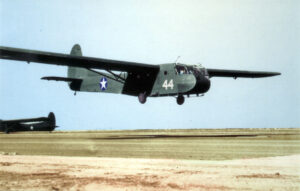
December 7th, 1941, was justly called a “day that will live in infamy.” Indeed, repercussions of the surprise attack on Pearl Harbor from Japan were felt even in the Robeson county area. The immediate response found the men and women volunteering to enlist in the nation’s armed forces. World War II left lasting mark on Robeson County with the construction of the world’s largest glider air assault training base.
The first mention of the Laurinburg Maxton Airbase is found in the minutes of the Maxton Town Board meeting of December 23, 1941 when Mayor W.H. Hasty announced that interest had been shown by the federal government in locating an airport in the vicinity of Maxton, as part of its effort to bolster air defenses in response to the surprise attack 16 days earlier. The February 6, 1942 issue of The Robesonian announced that the Civil Aeronautics Authority would be constructing a Class 3 airport similar to the Raleigh-Durham Airport near Maxton.
The town commissioners established a committee of 10 men to conduct a search for land that would be suitable. Maxton approached the City of Laurinburg about the possibility of working together on the project; they were joined by Robeson and Scotland Counties in purchasing 613 acres to lease for a $1 per year to the government to be used as a military reservation. In order to pay their fourth of the cost, Maxton issued bonds in the amount of $12,000.
Glider training at Laurinburg Maxton Airbase
Site established
The site was referred to in the May 1942 town minutes as the Maxton-Laurinburg Airbase Project, but sometime shortly afterwards the Army named the site the Laurinburg-Maxton Airbase. Even in the planning stages, the Army desired to increase the site and began the process of purchasing the surrounding property. Small and large parcels were purchased from thirty-seven owners totaling over 4600 acres. Not everyone was happy with the location of the airbase as can be gathered in a letter from Mrs. Lula Cox Sheppard to President Roosevelt in May 1942 quoted in the book “Forgotten Fields of America” by Lou Thole:
The government is taking several places for an air base including Our little place and I was wondering if we could get just one Little corner of which we live as it is on the outer edge.
We love our home so very much we hate to leave the place. It was just a little forgotten spot when we took it over, and we have built it up all we could.
But please understand sir, I could not complain at it up to the government if it is for defense, for we are too glad to do all we can for our country.
We have a son in the Navy and we are buying defense bonds through
the plant at which we work.
Fortunately for the Shepard family, the Executive Branch allowed arrangements to be worked out so that the family house was saved and relocated to a corner of land near the larger tract purchased by the Government. Their house was moved by placing logs under it and rolling to the new location where it was set on a new foundation.
Construction begins
The government authorized construction on April 20, 1942 with much of the labor being provided through the Works Progress Administration, a “New Deal” era agency that provided work to many during the Depression. An account from the May 1942 edition of The Robesonian rumored that while the plans called for a $500,000 airport that the project was really a glider training school that would cost 3 – 10 million dollars.
The base could rightly be called a city; it consisted of over 560 buildings and three runways 150 feet wide and 6,500 feet long forming a triangle. The cost was over ten million dollars and netted 20 miles of paved roads within the compound. Colonel Younger A. Pitts, a veteran of twenty-seven years of Army flying, oversaw the construction and served as the first commander of the Base. In addition to the new airbase the facilities at the Lumberton Airport and Camp MacKall were also used in the glider training program.
Housing problems
The sudden influx of thousands of soldiers caused problems unlike any the surrounding area had ever experienced. Nearly every home in Maxton made rooms available to rent to soldiers that had families since there was no married housing on the base.
Flora Lou Morgan Morton remembers her mother renting all of the upstairs rooms to soldiers and their wives. Her mother had a rule that she would not rent to a couple with children, so she always asked to make sure that the couples were childless. Mrs. Morton remembers one couple that her mother forgot to ask, and as they were moving in the sound of a baby crying was heard. Her mother started upstairs to tell them that they would have to leave in the morning but the begging of her own three children convinced her to let the family stay ― in fact they stayed over two years.
Patsy Hamer recounted in “Forgotten Fields of America” that her mother also opened her house to construction workers building the base and to soldiers.
Mother hired three cooks to prepare and serve meals to the construction workers… the cost was $1 a day for three meals.
Each of the four upstairs bedrooms was rented for $7 per week. The high demand for sleeping space led the day shift workers to share their rooms with night shift workers.
First anniversary
On September 1, 1943 the airbase celebrated its first anniversary; the event drew a crowd of over 10,000. The air show consisted of twenty-five planes with paratroopers making jumps and was topped off with the landing of four gliders. The celebration also included a softball game, a dance for the enlisted men and a dinner -dance for the officers. Colonel Pitts is quoted in August 25, 1943 issue of the base newspaper, The Slipstream before the celebration:
When we glance backward over the rugged path behind us, as the
first anniversary of our base approaches, it’s easy for us to pick out the obstacles we have overcome, for they were many. It is primarily the fine spirit, the willing cooperation of the officers and men and civilian employees of this command that turned this North Carolina farm land and the chaotic piles of lumber and dirt that decorated it, into a fine modern Army air base.
But in war-torn days such as these, the time for reminiscing is brief. So let’s devote it to constructive thinking, by looking back only to consider and plan ways to correct errors that crept in here and
there among our accomplishments. We must also look forward
and resolve that one year from now we will have doubled our progress.
The same issue goes on to give the early history of the base by those soldiers that were first to arrive at the base. Cpl. Jerry Giles remembers fields of cotton filled with pickers trying to get in the last crop to be grown on the property and of seeing Cpl. Eugene Dunham shooing a sow and her brood from beneath the barracks. Captain Robert DuBose remembered that all the offices were cramped into the Base Headquarters Annex along with a one-chair barber shop, and mini PX stocked with candy and drinks, as well as a dispensary. These first arrivals found farm roads and two gates guarded by civilians.
They also found many of God’s creations that the area was known for – namely gnats, mosquitoes and files. Set. George Tuttle remembers
As we walked across the weeded patch, we stepped high,
for we’d heard rumors of snakes being around to welcome us. We were really pioneering.
Casualties suffered
The year 1944 saw a change of command. Colonel Lloyd L. Sailor assumed command in March, replacing Colonel Pitts; however, his tenure would be short due to other needs. Sailor was replaced in June by Colonel Ellsworth Pierce Curry. During this year the base also suffered casualties. In May, a glider crashed killing an officer and injuring two others. The later part of the year twelve men on a C-47 were killed when a parachuted supply bundle dropped during a training mission hit the plane, and caused loss of control.
Recreation
The soldiers found time for much needed recreation on the base and according to the base newspaper, The Slipstream; they were entertained by traveling shows such as Ina Ray Hutton and her Orchestra. The paper also reported that the base had eight softball teams, movie theater and swimming facilities; by 1943 the base also had its own band that performed concerts three times a week.
Further evidence of the concern of the community over the morale of the soldiers stationed at the base is shown in September 1942 minutes of the Maxton Town Council. The Council appointed a special committee to work with the USO Committee in selecting a lot for a building. The building was erected the following year on Saunders Street (now Martin Luther King Highway). An article in the July 28, 1943 edition of The Slipstream announced the opening of the Maxton USO from 6pm until 11:30pm with Miss Minnie Lou McRae serving as hostess. An average of fifty men a night have enjoyed singing and dancing along with the piano and juke box.
Base closed
When World War II ended in 1945 talk began about the closing of the Laurinburg-Maxton Airbase and what the Towns of Maxton and Laurinburg would do with the property. Beginning in February 1946 joint discussions between the two towns yielded a desire to turn the base hospital over to the Scotland County and to lease the airport facilities to Presbyterian Junior College for an aviation training program.
In May 1946, the towns entered into a lease agreement with Airports Operations, Inc. a corporation established by Presbyterian Junior College to operate the aviation program. In June 1946, the towns voted that Scotland County Hospital Association could operate the base hospital but due to the fact that the towns did not obtain clear title to the property until March 1947 it was not until April 1948 that the hospital and forty-four acres were actually donated to the association.
Maxton and Laurinburg entered into an agreement in 1948 to form the Laurinburg-Maxton Airport Commission to administer the airport property. Today, the airport still functions, not only as a working airport, but as a tangible reminder of the area’s contribution to freedom during World War II.